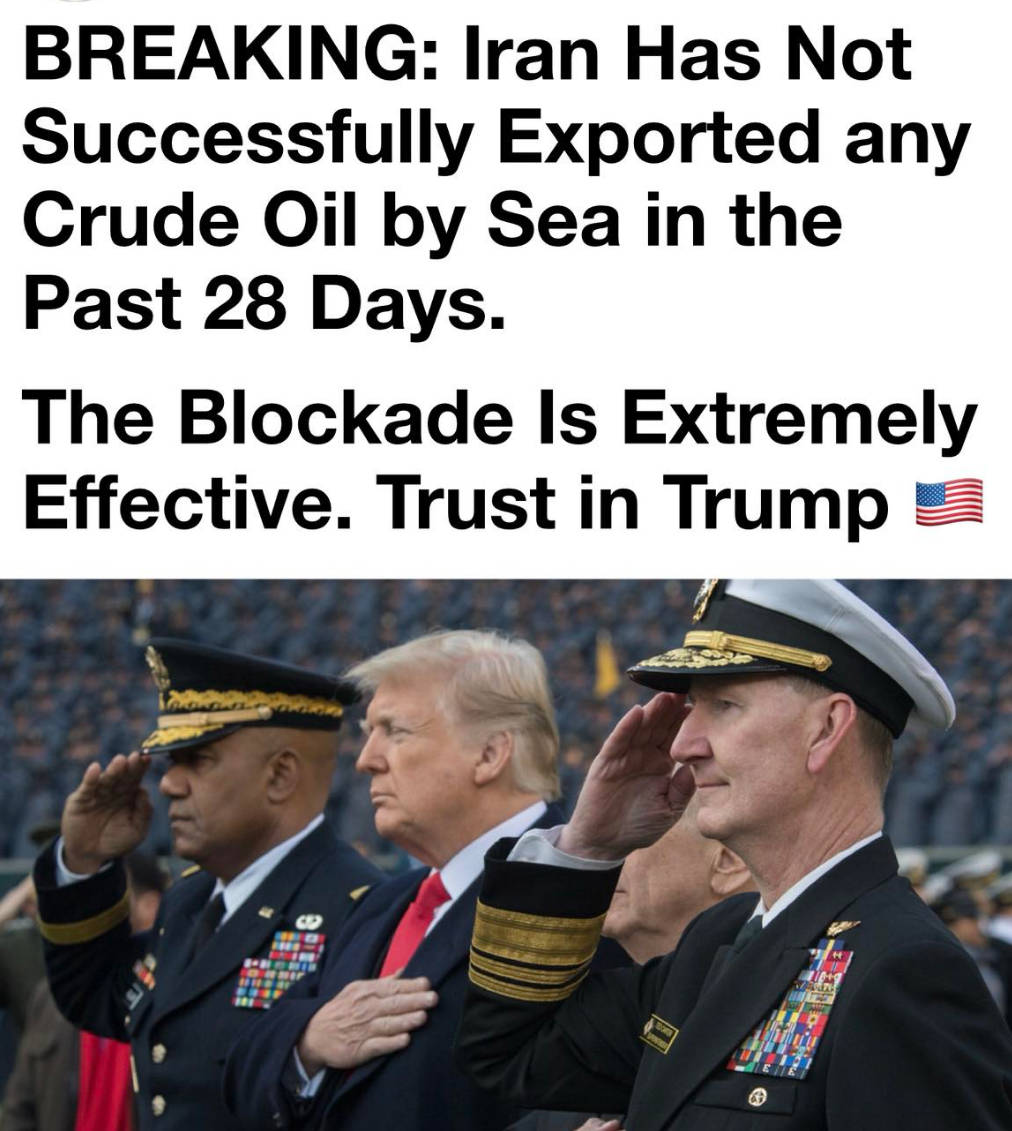
Supporters of former President Donald Trump are highlighting recent claims that intensified U.S. pressure on Iran has significantly reduced the country’s ability to export crude oil by sea, arguing that the strategy demonstrates the effectiveness of stronger enforcement measures and economic pressure.
According to commentary from Trump allies and conservative political voices, stricter sanctions enforcement and expanded monitoring efforts have reportedly disrupted Iranian oil shipments and limited the regime’s access to critical revenue streams. Advocates of the approach argue that restricting oil exports weakens Iran’s capacity to fund regional proxy groups and carry out destabilizing activities throughout the Middle East.
The claims have fueled renewed debate over U.S. foreign policy strategy toward Iran, particularly regarding the balance between economic sanctions, diplomatic engagement, and military deterrence. Supporters of the Trump-era approach argue that aggressive sanctions and “maximum pressure” tactics created stronger leverage against Tehran and reduced its ability to expand regional influence.
During Trump’s presidency, the United States withdrew from the Joint Comprehensive Plan of Action (JCPOA), commonly known as the Iran nuclear deal, and reimposed extensive sanctions targeting Iran’s banking, shipping, and energy sectors. The administration argued that the measures were necessary to counter Iran’s nuclear ambitions and regional activities.
Critics of the sanctions strategy, however, contend that broad economic restrictions can increase humanitarian hardships for ordinary civilians while escalating geopolitical tensions. Some foreign policy analysts also argue that long-term diplomatic solutions may be necessary to achieve sustainable regional stability and prevent further escalation.
Energy markets and international trade have remained closely tied to developments involving Iranian oil exports, as fluctuations in supply can influence global pricing and regional economic conditions. Analysts note that sanctions enforcement often involves coordination between multiple governments, maritime monitoring agencies, and financial institutions.
Supporters of Trump’s policies maintain that stronger enforcement sends a message of deterrence to adversarial governments and reinforces U.S. influence on the global stage. They argue that economic leverage, combined with military readiness, can pressure hostile regimes without requiring direct military conflict.
At the same time, foreign policy experts caution that claims regarding export disruptions and enforcement outcomes should be evaluated carefully, as precise shipping data and sanctions impacts can vary depending on market conditions, international compliance, and unofficial trade channels.
As discussions continue, the broader debate surrounding Iran policy remains a major issue in U.S. politics and international relations, with differing views on how best to balance national security objectives, diplomatic engagement, and regional stability.