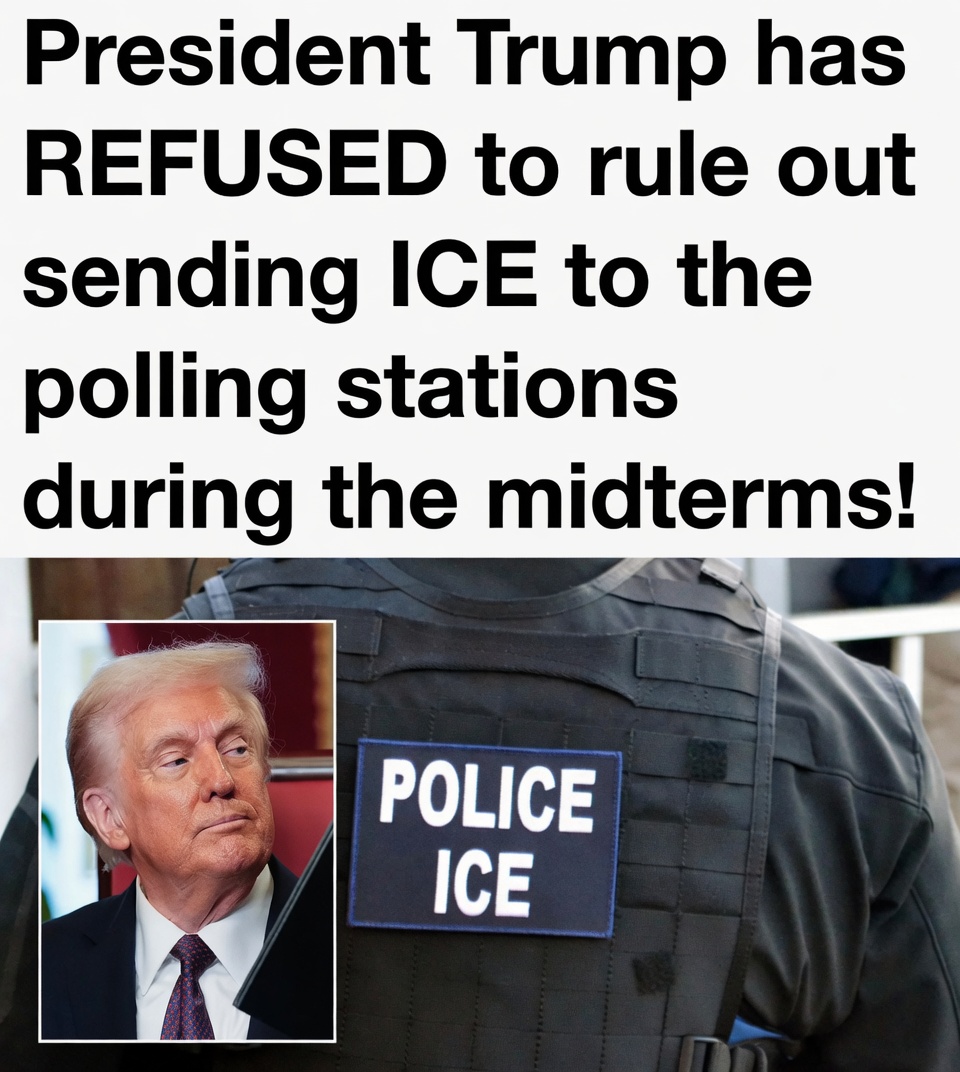
Recent political commentary surrounding former President Donald Trump has focused on his continued emphasis on strengthening election security measures, including proposals related to voter eligibility verification and federal enforcement priorities. Supporters of Trump argue that stricter safeguards are necessary to ensure that only legally eligible citizens participate in U.S. elections.
Among the ideas being discussed in political circles is the potential expansion of federal involvement in election integrity efforts, including heightened scrutiny of voter registration systems and improved verification of citizenship status. Some supporters have also referenced the possibility of immigration enforcement agencies being used in coordination with broader federal security efforts, though no formal nationwide policy deploying immigration officers at polling locations has been enacted.
Advocates of stricter election controls argue that voter identification requirements, residency verification, and citizenship confirmation procedures are essential tools to maintain public confidence in the democratic process. They claim that inconsistencies in voter rolls and variations in state-level election rules can create vulnerabilities that should be addressed through standardized enforcement mechanisms.
Critics of these proposals, however, argue that concerns about widespread non-citizen voting have not been substantiated at a scale that would justify expanded federal enforcement at polling places. Election officials and many policy experts emphasize that existing safeguards already include multiple layers of verification designed to prevent ineligible voting, including registration checks, identity confirmation requirements in many states, and post-election audit procedures.
Civil liberties organizations have also raised concerns that increased law enforcement presence near voting locations could create fear or confusion among voters and potentially discourage participation. They argue that maintaining a clear separation between law enforcement agencies and polling site operations is important to preserving voter confidence and accessibility.
Election security remains a highly debated issue in American politics, particularly in the aftermath of closely contested elections and ongoing disputes over voting laws. Supporters of reform measures continue to push for stricter national standards, while opponents stress the importance of protecting voting access and avoiding policies that could unintentionally suppress legitimate voters.
Former President Trump’s broader messaging on election integrity continues to resonate with his political base, who view tighter enforcement and verification measures as necessary steps to strengthen democratic legitimacy. At the same time, state and federal election authorities maintain that current systems are designed to balance security with accessibility.
As the debate continues, policymakers remain divided on how best to ensure both confidence in election outcomes and broad access to the ballot box, with discussions expected to continue through upcoming election cycles.