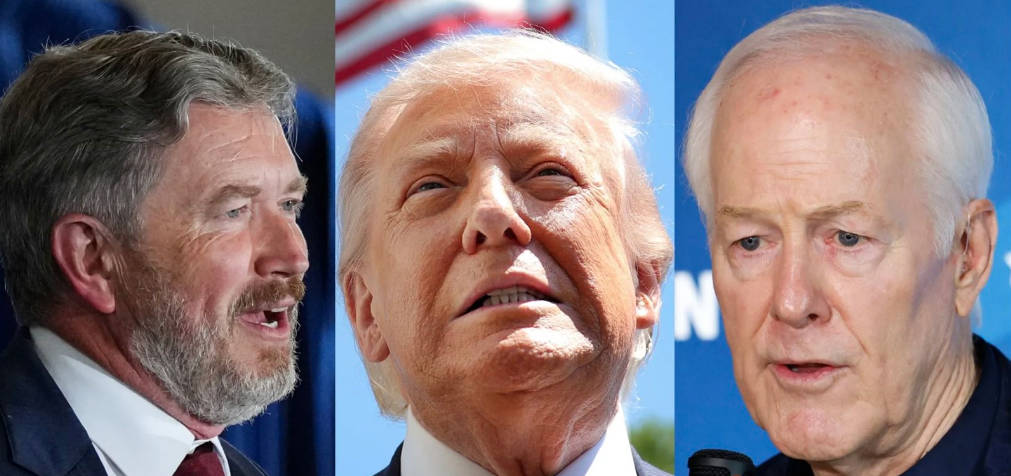
WASHINGTON — President Donald Trump continues to demonstrate significant influence within the Republican Party, as candidates he endorsed have achieved notable victories in recent primary contests, defeating several incumbent lawmakers who had previously diverged from his policy priorities.
In Kentucky, Rep. Thomas Massie, known for his libertarian-leaning positions and occasional breaks with party leadership, lost his Republican primary bid to Ed Gallrein, a former Navy SEAL backed by Trump. The race drew national attention due to its high spending and sharp contrasts on issues including fiscal policy and foreign affairs.
Similarly, in Louisiana, Sen. Bill Cassidy failed to advance in his reelection efforts after facing opposition from a Trump-endorsed challenger. Cassidy had drawn criticism from some party members for his vote to convict Trump during the former president’s second impeachment trial.
Most recently, in Texas, Sen. John Cornyn conceded defeat in a Republican Senate runoff to state Attorney General Ken Paxton, whom Trump endorsed in the contest. Paxton secured approximately 63% of the vote, according to preliminary results, marking another shift in the state’s political landscape.
These outcomes reflect ongoing dynamics within the GOP as it navigates the post-2024 election period. Trump has prioritized candidates aligned with his “America First” agenda, emphasizing border security, opposition to certain global trade policies, and reduced government spending. Analysts note that his endorsements have proven effective in mobilizing voter support in multiple races this cycle.
Political observers point to these results as evidence of a realignment in the party. While some view it as a consolidation of conservative forces, others express concern about potential vulnerabilities in the general election, particularly in competitive districts or states. Cornyn, a longtime Senate leader, had positioned himself as an ally to Trump on many issues but faced challenges over his legislative record.
Trump’s overall endorsement success rate in 2026 primaries has been strong, with reports indicating a substantial number of wins for his preferred candidates. However, party strategists caution that primary victories do not always translate directly to success in November’s general elections.
The developments come amid broader discussions about the future direction of the Republican Party. Supporters of the changes argue they strengthen the party’s commitment to its base, while critics worry about the departure of experienced lawmakers with institutional knowledge.
As the 2026 midterm cycle progresses, these primary results are expected to influence candidate recruitment and campaign strategies across both parties. Further contests remain on the calendar, with additional races potentially testing the extent of Trump’s sway over Republican voters.
BREAKING 🔔🚨 Trump-Backed Candidates Secure Key Wins in Republican Primaries, Ousting Incumbent Critics