President Donald Trump pushed hard for Congress to pass the SAVE America Act before leaving for members’ summer recess, which began last week.
And while the House repeatedly delivered on the president’s request by passing a version of the bill a number of times over the summer, the measure repeatedly ran into roadblocks in the Senate, where a handful of Republican members – most of them retiring at the end of this term – joined Democrats in rejecting it.
Last week, all 100 senators, including several conservatives who had publicly called for continued debate over voter-ID legislation, agreed without objection to a five-week August recess, effectively postponing consideration of the SAVE America Act until September.
The vote effectively puts future passage of the bill in question.
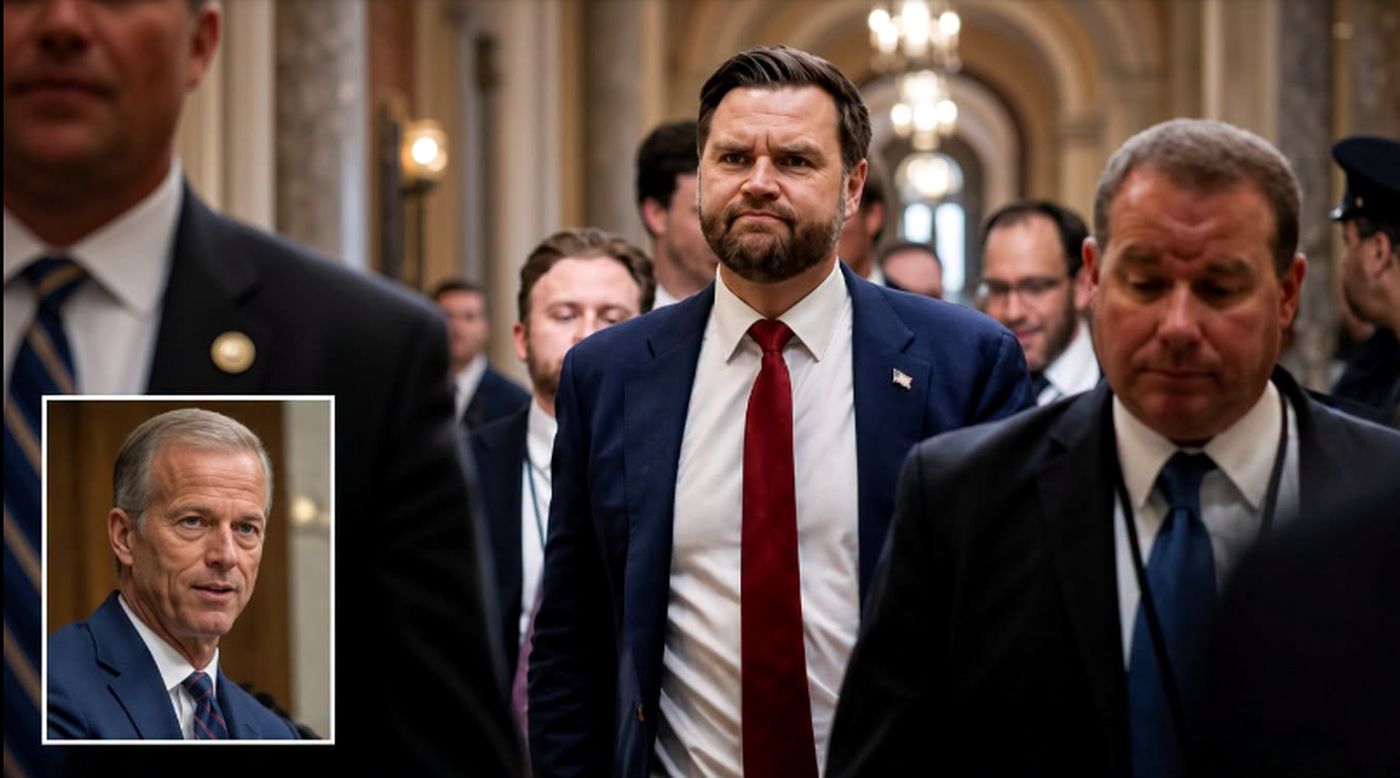
Senate Majority Leader John Thune (S.D.) finalized the arrangement during an overnight session.
At approximately 2:07 a.m. on Saturday, Aug. 8, with Republican Sen. Bernie Moreno of Ohio presiding over a largely empty chamber, Thune requested unanimous consent to move the Senate into a series of pro forma sessions.
Moreno asked whether there was any objection. No senator objected, clearing the way for the extended recess.
The decision meant the SAVE America Act would not receive additional floor debate, amendments or a vote before senators left Washington.
The legislation includes voter-identification and proof-of-citizenship requirements for federal elections and has been a major legislative priority for President Donald Trump.
The recess followed a marathon stretch of Senate business that included the confirmation of Todd Blanche as attorney general by a 50-49 vote and passage of an interim spending measure funding the federal government through Dec. 11.
The legislation will consequently remain on hold while the Senate conducts pro forma sessions, with regular legislative business scheduled to resume on Monday, Sept. 15.
The procedural details show just how quietly the Senate’s recess agreement came together.
Late Friday, Aug. 7, Senate Majority Leader John Thune initiated what is commonly known on Capitol Hill as a “hotline,” an informal process used to determine whether any of the Senate’s 100 members planned to object to the proposed recess arrangement.
Neither senator objected during the hotline process, and neither subsequently blocked the unanimous-consent agreement when it reached the Senate floor several hours later.
Under Senate procedure, unanimous consent requires exactly that: the absence of an objection from every senator participating in the process.
Any single senator could have objected and prevented the agreement from proceeding by unanimous consent. When the opportunity arrived, however, nobody did.
The result was that senators departed Washington without resolving the fight over the act, despite the public pressure from conservatives to keep the chamber in session and force action on the election legislation.
Before senators left Washington for the extended August recess, the chamber narrowly confirmed Todd Blanche as attorney general in a 50-49 vote that left Republicans virtually no room for defections.
Republican Sen. Bill Cassidy of Louisiana provided a critical vote for confirmation, while GOP Sens. Susan Collins of Maine and Lisa Murkowski of Alaska broke with their party and opposed Blanche.
Collins and Murkowski raised concerns about the potential weaponization of the Justice Department and an anti-weaponization fund they said could potentially benefit defendants prosecuted in connection with the Jan. 6 Capitol riot.
Blanche’s nomination had encountered Republican resistance even before reaching the Senate floor.
Sens. John Cornyn of Texas and Thom Tillis of North Carolina had previously withheld their support as they negotiated concessions from the Trump administration before allowing Blanche’s nomination to advance through the Senate Judiciary Committee.
Cornyn ultimately backed Blanche’s confirmation.
This comes as President Donald Trump scored a significant Supreme Court victory Monday as states across the country prepare for the November midterm elections.
The decision removes a major legal obstacle that had prevented the administration from moving forward with portions of Trump’s election-related executive order in nearly half the country.
The Supreme Court paused a federal judge’s injunction blocking the Trump administration from implementing provisions of Trump’s March executive order affecting mail-in voting in 23 states and the District of Columbia.
The 10-page unsigned opinion allows the administration to begin moving forward while litigation over the legality of Trump’s directives continues.
The dispute involves three provisions designed to strengthen citizenship verification and procedures surrounding mail-in ballots.
The first directs the Department of Homeland Security to create lists of adult U.S. citizens in each state and provide them to states at least 60 days before a federal election.
Another directs the attorney general to prioritize investigations and potential prosecutions of state and local officials who issue federal ballots to individuals ineligible to vote.
The third directs the U.S. Postal Service to develop rules involving lists of voters receiving mail ballots and restrictions on mailing ballots to individuals not included on enrolled-voter lists.
California and 22 other states, along with the District of Columbia, challenged the executive order, arguing that Trump was interfering with authority the Constitution gives states over elections.
U.S. District Judge Indira Talwani previously prohibited the federal government from implementing the challenged restrictions in those states before the November elections.
The U.S. Court of Appeals for the 1st Circuit declined to pause Talwani’s ruling, prompting the Trump administration to seek emergency intervention from the Supreme Court.
Solicitor General D. John Sauer argued that the states had sued prematurely because federal agencies had not yet determined exactly how Trump’s directives would be implemented.
The Supreme Court’s majority agreed.