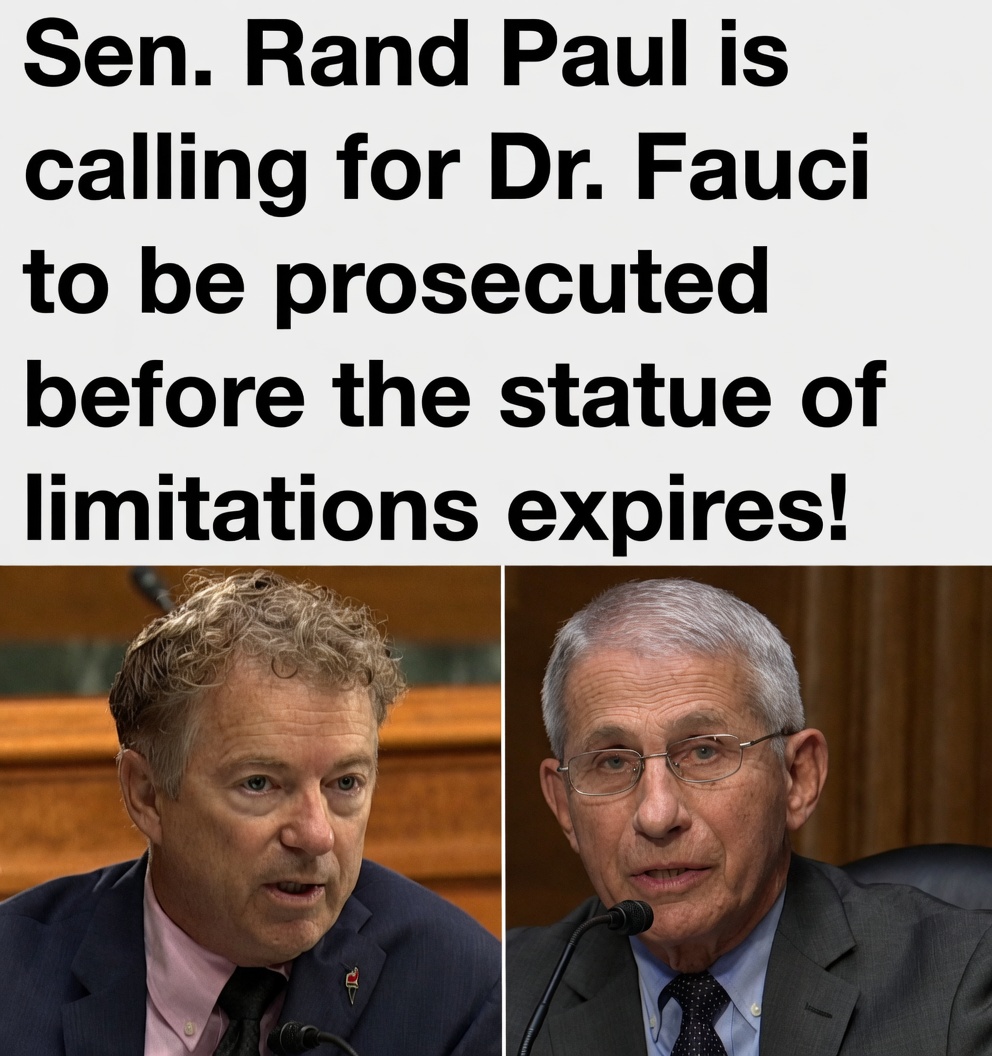
Senator Rand Paul has renewed calls for increased oversight and accountability regarding Dr. Anthony Fauci’s role in shaping the United States’ response to the COVID-19 pandemic. The remarks come amid ongoing political debate over public health decision-making, government authority during emergencies, and the long-term impacts of pandemic-era policies.
Rand Paul, a longtime critic of several federal COVID-19 measures, has argued that key decisions made during the pandemic require further examination by Congress and relevant oversight bodies. His concerns focus on issues such as lockdown policies, school closures, vaccine mandates, and federal guidance that influenced state-level public health actions across the country.
Critics of the pandemic response have raised questions about the origins of COVID-19, including discussions around potential links to laboratory research and the funding of scientific programs overseas. These topics have been widely debated among policymakers, scientists, and intelligence agencies, with differing assessments and no universally agreed conclusion publicly established.
Dr. Anthony Fauci, who served as a leading infectious disease expert in the federal government for decades, has defended the scientific basis of pandemic response measures, emphasizing that decisions were made based on evolving data, public health risk assessments, and the urgent need to slow the spread of the virus during a rapidly changing global crisis.
Supporters of Fauci’s role argue that many of the measures implemented were consistent with public health practices used internationally during major outbreaks. They contend that policy decisions were intended to reduce fatalities, protect healthcare systems from overload, and provide time for vaccine development.
However, critics maintain that some interventions caused significant social and economic disruption, including impacts on education, mental health, small businesses, and workforce stability. These opposing perspectives continue to fuel debate over how governments should balance individual freedoms with collective health measures during emergencies.
Senator Paul has also emphasized the importance of ensuring that public officials are held to consistent standards of accountability, arguing that oversight is necessary to maintain trust in federal institutions. He and other lawmakers have called for continued investigation into pandemic-era decision-making processes, including funding channels and advisory structures used during the crisis.
Public health experts note that retrospective evaluations of pandemic policy are common after large-scale emergencies and often involve extensive review of data, timelines, and decision frameworks. Such analyses typically take years and may include input from scientific panels, governmental audits, and independent research organizations.
As political debate continues, the legacy of COVID-19 policy remains a significant issue in American public discourse, shaping discussions about emergency preparedness, scientific authority, and the role of government in responding to future health crises.