The Great Defiance: Italy Rejects Rubio’s War Demands as Europe Shatters the Illusion of American Control over NATO
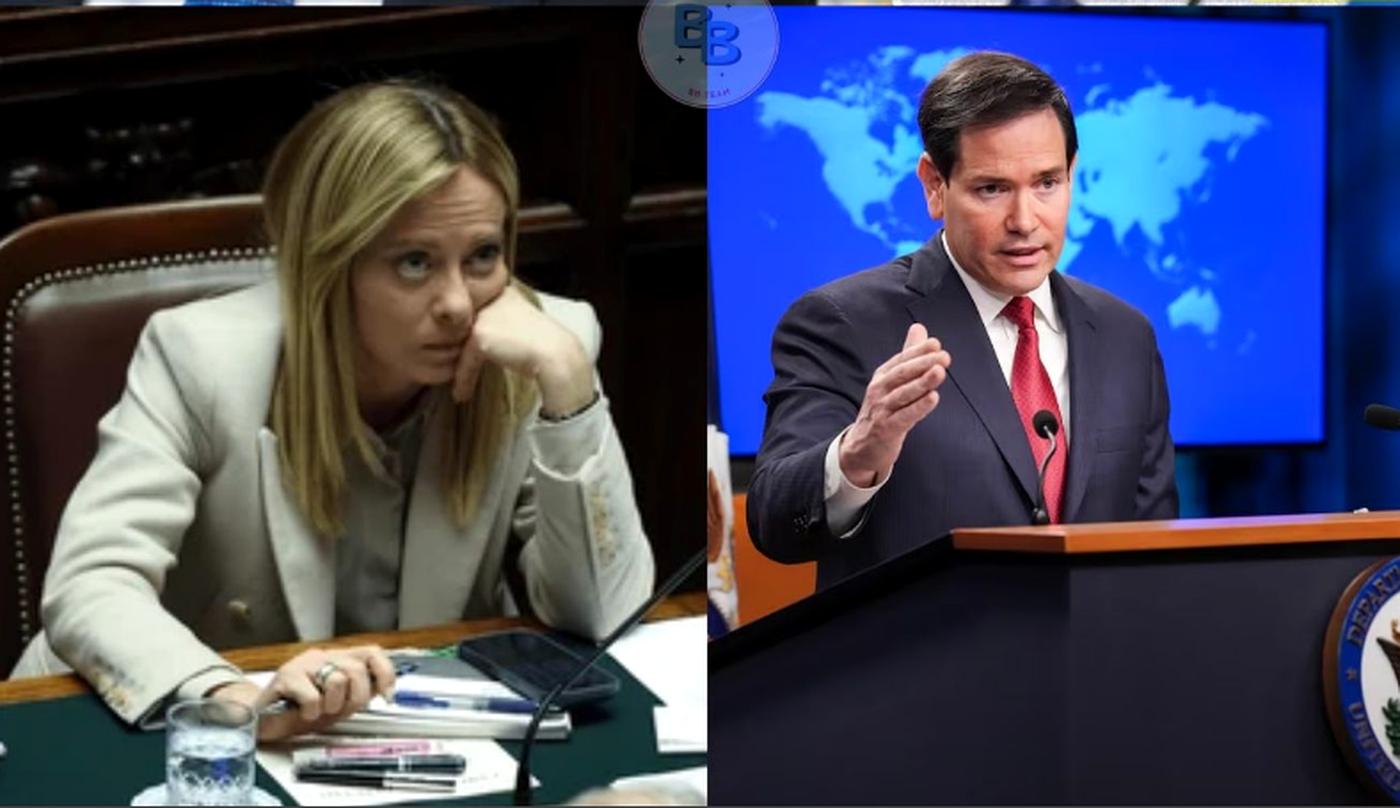
The world of international diplomacy is currently witnessing a tectonic shift that many believed was impossible. For decades, the relationship between the United States and its European allies followed a predictable script: Washington would issue a directive, and Europe would provide the logistical and military support required to execute it. But that script has been torn to pieces. US Secretary of State Marco Rubio recently embarked on a high-profile, two-day mission to Italy and the Vatican with a clear objective: to secure concrete military support and basing rights for the ongoing conflict in Iran. He returned to Washington with nothing but a “certainly frank” rejection, signaling that the era of unconditional European compliance has come to a grinding halt.
The visit was intended to repair ties that had already been strained by the US-led war in Iran. Rubio, representing an administration that has grown increasingly frustrated with what it perceives as European “rhetoric without action,” met with Italian Prime Minister Giorgia Meloni and her foreign minister. During these meetings, Rubio warned that Tehran’s attempt to assert control over the strategic Strait of Hormuz was an unacceptable threat to global security. He expected that the weight of the American office would be enough to compel Italy to open its bases, specifically those in Sicily, to US bombers bound for the Middle East.
However, the response from Rome was polite, principled, and utterly immovable. Prime Minister Meloni informed the Secretary of State that Italy’s constitution requires explicit parliamentary approval for any offensive military operations. Furthermore, she noted that the Italian public is overwhelmingly opposed to being dragged into what they perceive as an illegal and unnecessary war. Meloni’s stance was not an act of anti-Americanism; it was an act of constitutional sovereignty. She made it clear that Italy does not exist to serve as a launchpad for American wars that fall outside the scope of the NATO treaty.
This “certainly frank” discussion, as Meloni described it in diplomatic code, highlights a fundamental disagreement that is currently tearing at the fabric of the NATO alliance. Marco Rubio, who was once a vocal supporter of the North Atlantic Treaty Organization, has begun to publicly question the utility of the arrangement. In recent statements, he asked why the United States should remain committed to defending Europe if European nations deny the US the right to use their bases during a crisis. His perspective reveals a specific view of NATO: that it is a bargain where the US provides protection in exchange for total access to European infrastructure whenever Washington decides to launch a military operation.
But Europe has a very different view. To leaders like Meloni and their counterparts in Spain and Germany, NATO is a defensive alliance designed to protect the territory of its members—it is not a blank check for American interventionism in the Middle East or elsewhere. Spain has already set a precedent by denying the US the use of its airspace and bases for Iran-related operations, a move that Rubio publicly blasted as “impeding the mission.” The fact that these European democracies are choosing to uphold their own laws and the will of their people over the demands of the US Secretary of State is a clear sign that the balance of power is shifting.
The frustration in Rubio’s rhetoric is palpable. He has characterized the refusal of base rights as a “problem that needs to be examined” and has hinted at the possibility of withdrawing US troops from countries that do not comply. There are currently about 85,000 US troops stationed across Europe, a presence that has long been the backbone of American global power. However, Rubio’s threats of withdrawal seem to be having the opposite effect of what was intended. Instead of scaring European allies into submission, these threats are only accelerating Europe’s drive for military and industrial independence.
Across the continent, nations are already preparing for a future where American protection can no longer be relied upon. Germany is significantly increasing its ammunition production, Norway is becoming a primary energy provider for the region, and Spain is exploring aerospace partnerships with Turkey rather than remaining locked into American defense ecosystems. Each time an American official uses the threat of troop withdrawals to demand compliance, it confirms the European suspicion that the US commitment to NATO is conditional and unreliable.
The reality that Rubio and the current administration seem to be missing is that the US military presence in Europe is not just a favor to Europeans; it is a critical component of American strategic interests. Forward-deployed forces and logistical hubs in Europe allow the United States to project power across the globe, conduct intelligence operations, and maintain a presence in key geopolitical theaters. By threatening to dismantle this infrastructure over a lack of support for the Iran war, Washington is essentially threatening to harm its own strategic capabilities.
Furthermore, the historical context of NATO reveals why Rubio’s demands are so unprecedented. While the alliance’s Article 5 collective defense provision was invoked following the September 11 attacks to support operations in Afghanistan, that was a response to a direct attack on a member state. The current conflict in Iran does not carry that same legal or moral weight for European nations. Demanding that allies provide bases for a war they do not support, and that was not triggered by a defensive necessity, is an overreach that European constitutions were specifically designed to prevent.
As Rubio left Italy empty-handed, the message to the world was clear: American pressure no longer works when the answer is a firm, democratic “No.” The Secretary of State may continue to question “what is in it for the United States” regarding NATO, but the answer from Europe is that the alliance only works if it respects the sovereignty and the legal frameworks of all its members. The more the United States tries to treat its allies as subordinates, the faster those allies will build the alternatives necessary to walk away.
This failed diplomatic mission is a watershed moment for the trans-Atlantic relationship. It marks the point where the rhetoric of “America First” collided with the reality of European sovereignty, and sovereignty won. The glittering skylines of Rome and the ancient halls of the Vatican remain untouched by the American war machine, and for the people of Italy, that is a victory for their constitution and their national interest. The path forward for the United States is now one of diminishing returns; as it reaches for more control, it finds its hands increasingly empty. The global order is being rewritten, and this time, the ink is not being supplied by Washington.