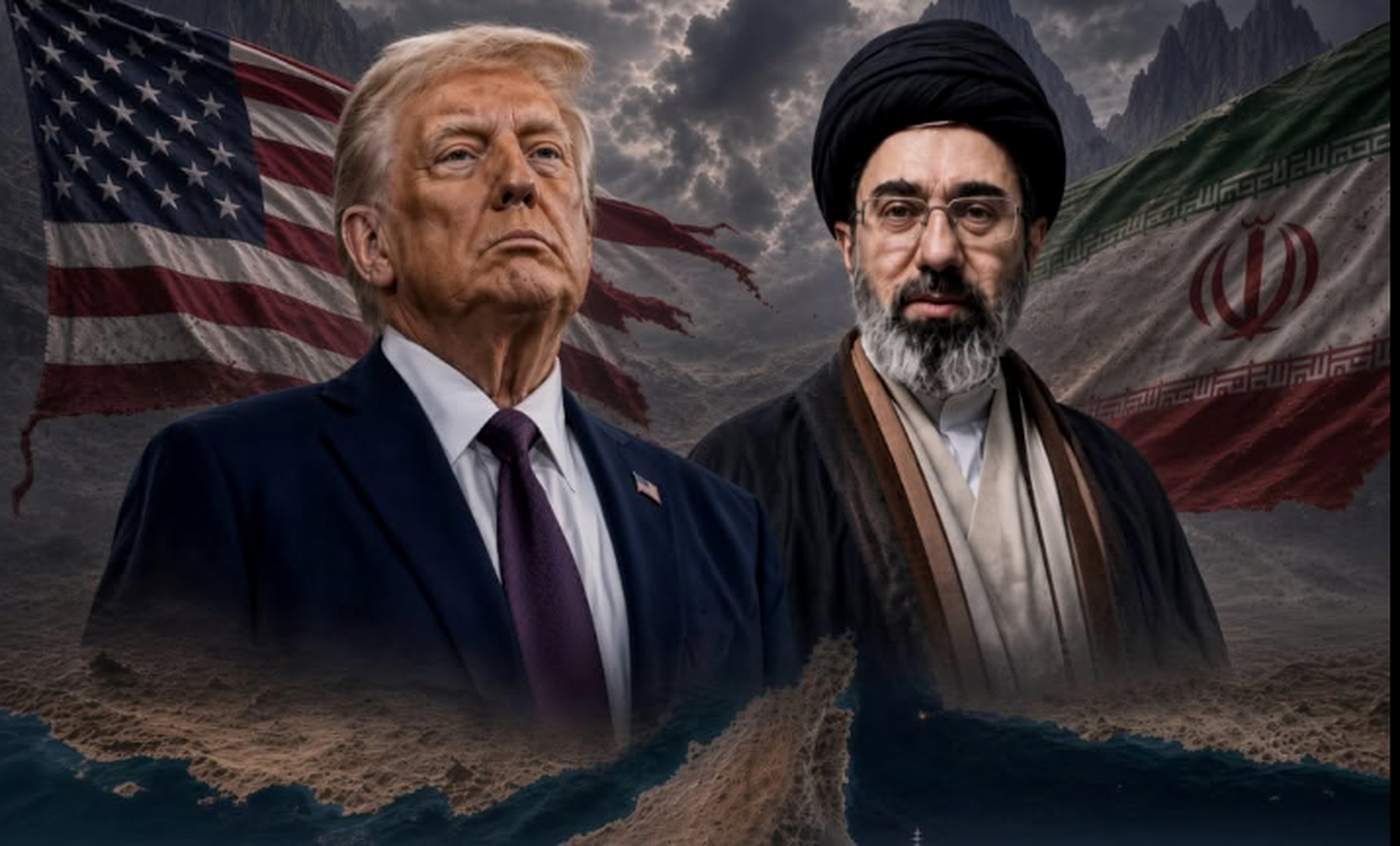
WASHINGTON — President Donald Trump and senior administration officials are working to finalize the details of a potential agreement to end the war with Iran, even as U.S. military forces conduct additional strikes against Iranian targets and tensions remain high around the strategically important Strait of Hormuz.
Secretary of State Marco Rubio said negotiations were continuing and suggested that reaching an agreement could take several more days. His comments came during a visit to India, where he reiterated Washington’s demand that the Strait of Hormuz be reopened.
“The straits have to be open, they’re going to be open,” Rubio told reporters. He described the continued disruption of the waterway as unlawful, unsustainable and unacceptable to the international community.
Rubio also confirmed that discussions were taking place in Qatar, where Iranian and American officials were reportedly working through the language of a preliminary agreement.
“I think it’s a lot of talking back and forth going on about specific language in the initial document, so it’ll take a few days,” Rubio said. “The president expressed his desire to make it. He’s either going to make a good deal or no deal.”
U.S. Forces Conduct Self-Defense Strikes
While negotiations continued, U.S. Central Command reported that American forces carried out what it described as “self-defense strikes” in southern Iran on Monday.
According to Capt. Tim Hawkins, a Central Command spokesperson, the strikes targeted missile launch sites and Iranian boats allegedly involved in efforts to place mines in regional waterways.
“U.S. Central Command continues to defend our forces while using restraint during the ongoing cease-fire,” Hawkins said.
The spokesperson declined to identify the American ships involved in the reported threats, disclose their precise locations or provide detailed information about the locations of every strike.
A senior U.S. military official said American forces operating in the region had faced threats from Iranian surface-to-air missiles. The U.S. military presence reportedly includes dozens of warplanes and nearly two dozen Navy warships, including two aircraft carriers and their escort vessels.
The official said some of the American strikes occurred near Bandar Abbas, a major Iranian port and naval base.
The developments have raised fresh questions about the durability of the cease-fire, which reportedly took effect approximately six weeks ago. Although large-scale fighting has diminished, American and Iranian forces have continued to experience confrontations in different forms.
Negotiations Continue in Qatar
Iranian officials acknowledged Monday that progress had been made during negotiations with Washington but cautioned that a final agreement was not close to being signed.
Esmaeil Baqaei, an Iranian Foreign Ministry spokesman, said the two sides had reached understandings on many issues under discussion.
“It is correct to say that we have reached a conclusion on a large portion of the issues under discussion,” Baqaei said during a weekly news briefing.
However, he warned against interpreting that progress as evidence that a final agreement was imminent. Baqaei also accused the United States of changing its negotiating positions.
The conflicting assessments illustrate the remaining challenges facing negotiators as they attempt to resolve disputes over security, sanctions, nuclear enrichment and control of the Strait of Hormuz.
Nuclear Restrictions and Sanctions Relief
A senior Trump administration official said Sunday that Iranian negotiators had agreed to a proposal that would require Tehran to eliminate its stockpile of highly enriched uranium. The official indicated that the understanding remained subject to further negotiations and that the precise terms were still being developed.
Under the potential agreement, Iran would also be required to reopen the Strait of Hormuz. In exchange, the United States could lift its blockade of the waterway and consider easing sanctions imposed on Tehran.
The official said negotiators broadly agreed on the framework of a possible deal but were still working to resolve important details, particularly the mechanisms for enforcing restrictions on Iran’s nuclear program.
According to the account, the administration wants a firm commitment limiting or ending uranium enrichment. The duration of that commitment—whether 20 or 30 years—was described as less important than ensuring that the agreement could be effectively monitored and enforced.
The proposed arrangement is also expected to go beyond the terms of the 2015 nuclear agreement negotiated during the Obama administration. Trump has repeatedly criticized that agreement, arguing that it did not impose sufficiently lasting restrictions on Iran’s nuclear activities.
Trump Calls for a “Good and Proper” Agreement
Trump said that any agreement reached with Iran would need to be “good and proper.” He also criticized the Obama administration’s approach to Tehran, accusing the former president of providing Iran with substantial financial resources and what he characterized as a path toward developing nuclear weapons.
The comments reflect the administration’s stated intention to pursue a more restrictive nuclear agreement while addressing the security of international shipping routes.
For now, negotiations remain unresolved. The continued military activity, disagreements over enforcement and uncertainty surrounding the Strait of Hormuz all present obstacles to a final settlement.
As officials in Washington and Tehran continue discussions, the potential agreement will depend on whether both sides can reach consensus on the remaining provisions and establish a framework capable of reducing military tensions while addressing the nuclear dispute.
The information in this report is based on the account provided and should be independently verified against official statements and reliable news reports.