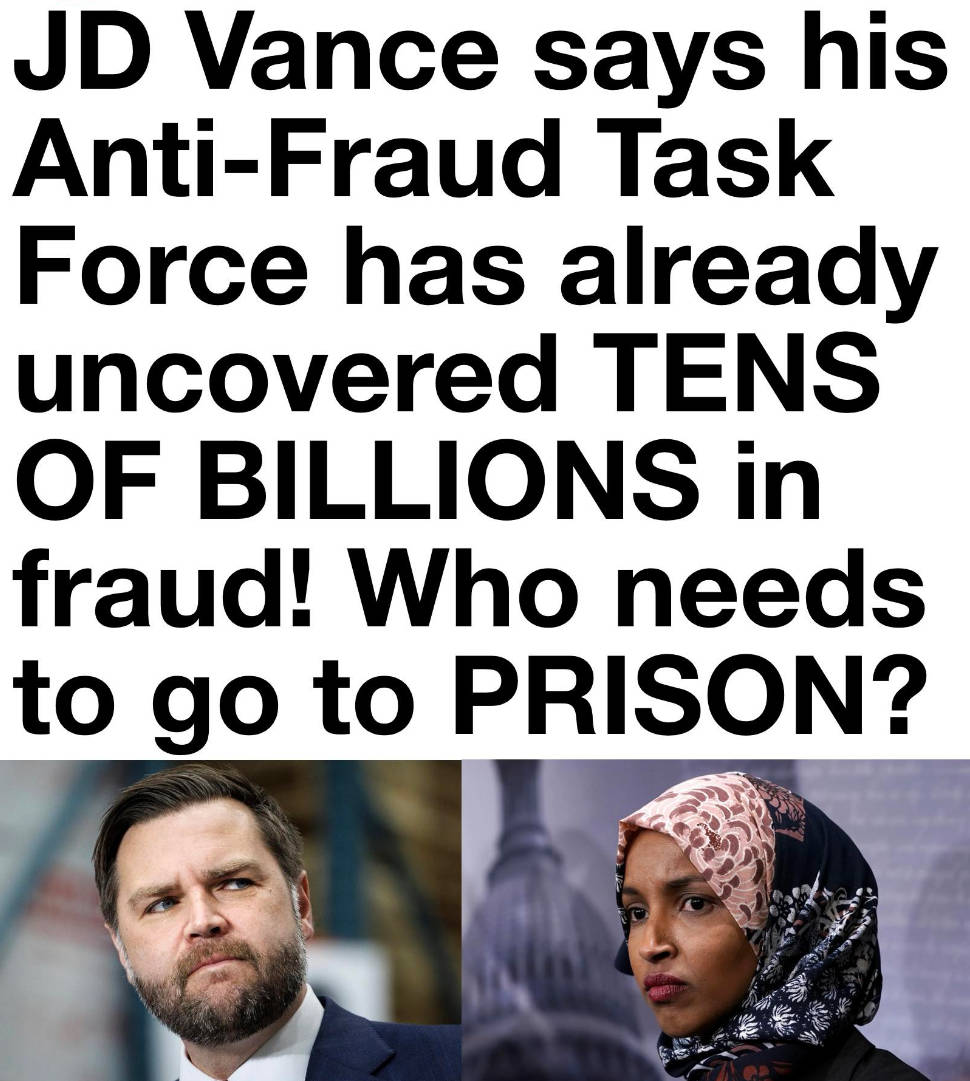
U.S. Senator JD Vance has announced that a newly established Anti-Fraud Task Force has identified what he describes as “tens of billions of dollars” in potential taxpayer fraud, waste, and improper payments across federal government programs.
According to statements associated with the initiative, the task force was formed to conduct a comprehensive review of federal spending and to detect financial irregularities, inefficiencies, and weaknesses in oversight systems. Early-stage assessments reportedly indicate that substantial amounts of public funds may have been misallocated or lost due to administrative errors, outdated monitoring processes, and long-standing structural challenges within government accounting systems.
Vance stated that although the investigation is still ongoing, the scale of the preliminary findings suggests broader systemic issues rather than isolated incidents. He emphasized that improving financial accountability, strengthening auditing procedures, and enforcing stricter compliance standards will be central priorities as the review continues.
The announcement comes at a time when national discussions about inflation, government spending, and fiscal responsibility remain highly active. Supporters of the initiative argue that stronger oversight and enforcement mechanisms are necessary to ensure taxpayer dollars are used efficiently and transparently. They believe that identifying inefficiencies within federal programs is an important step toward improving trust in public institutions.
However, critics caution that early estimates of “fraud” or “waste” often include preliminary calculations, disputed classifications, or administrative discrepancies that have not yet been confirmed through full independent audits or legal review processes. They stress that accurate conclusions require thorough verification and established investigative procedures before final judgments are made.
The task force has also attracted political attention due to its broader implications for federal accountability and spending oversight. While public commentary has referenced various political figures in discussions surrounding government spending, no formal charges or verified legal findings have been announced in connection with the current claims.
Vance and his supporters maintain that the initiative reflects a broader effort to improve transparency and reduce inefficiency across federal agencies. They argue that long-standing gaps in oversight have contributed to financial losses that must now be addressed through stronger enforcement and reform measures.
Further updates and detailed audit reports are expected as the investigation progresses and additional data becomes available. Analysts note that large-scale federal reviews typically require significant time to verify findings and ensure accuracy before final conclusions can be drawn.
For now, the announcement has intensified ongoing debate over how effectively public funds are managed and what reforms may be necessary to strengthen oversight systems in the future.